
Stroop Word Reading in Huntington’s, read from speech
In Huntington’s disease trials, Cephalgo reads Stroop Word Reading, a cUHDRS component read aloud, from recordings you hold, site visits or home, with no extra rater or wearable, stable across phone and software changes. Device changes ›
Early Huntington’s change is hard to see between visits
Disease-modifying trials in HD-ISS stages 0 to 2 need more readings than the visit schedule gives.
No clinical signs yet
In stages 0 and 1 the cUHDRS barely moves within a trial, so trials need more readings per participant.
Rated only at visits
Stroop Word Reading is scored at site visits, with nothing in between.
Long trials
HTT-lowering trials run for years, so each participant needs many readings on one scale.
How we validate the Huntington’s reading
Speech separates premanifest gene carriers from controls; on your study, readings are calibrated to Stroop Word Reading, then evaluated on held‑out participants, following the DiMe V3 framework.
Premanifest carriers
Speech and linguistic variables separated premanifest Huntington’s gene carriers from controls.
On Stroop Word Reading
Readings are calibrated to the Stroop Word Reading count on screening and baseline data from your study, blind to arm, locked before any post‑baseline reading, then evaluated on held‑out participants never used for calibration.
Built for disease-modifying Huntington’s trials, including HTT-lowering therapies
Context of use: HD‑ISS stages 0 to 2, as an exploratory or secondary endpoint. In stages 0 and 1, readings give a speech baseline alongside the cUHDRS.
Why speech, between visits
The home task is the same task as at site visits; practice effects are handled in the analysis plan. Readings between visits are in hand before dose and go/no‑go decisions.
Speech domains from each session
Articulation and speech timing come back from each site-visit recording and home session, beside Stroop Word Reading (reading speed).
Next to the visit score
Readings are joined to the Stroop Word Reading visit score, per participant and visit. Symbol Digit Modalities Test, Total Motor Score and Total Functional Capacity stay with site raters.
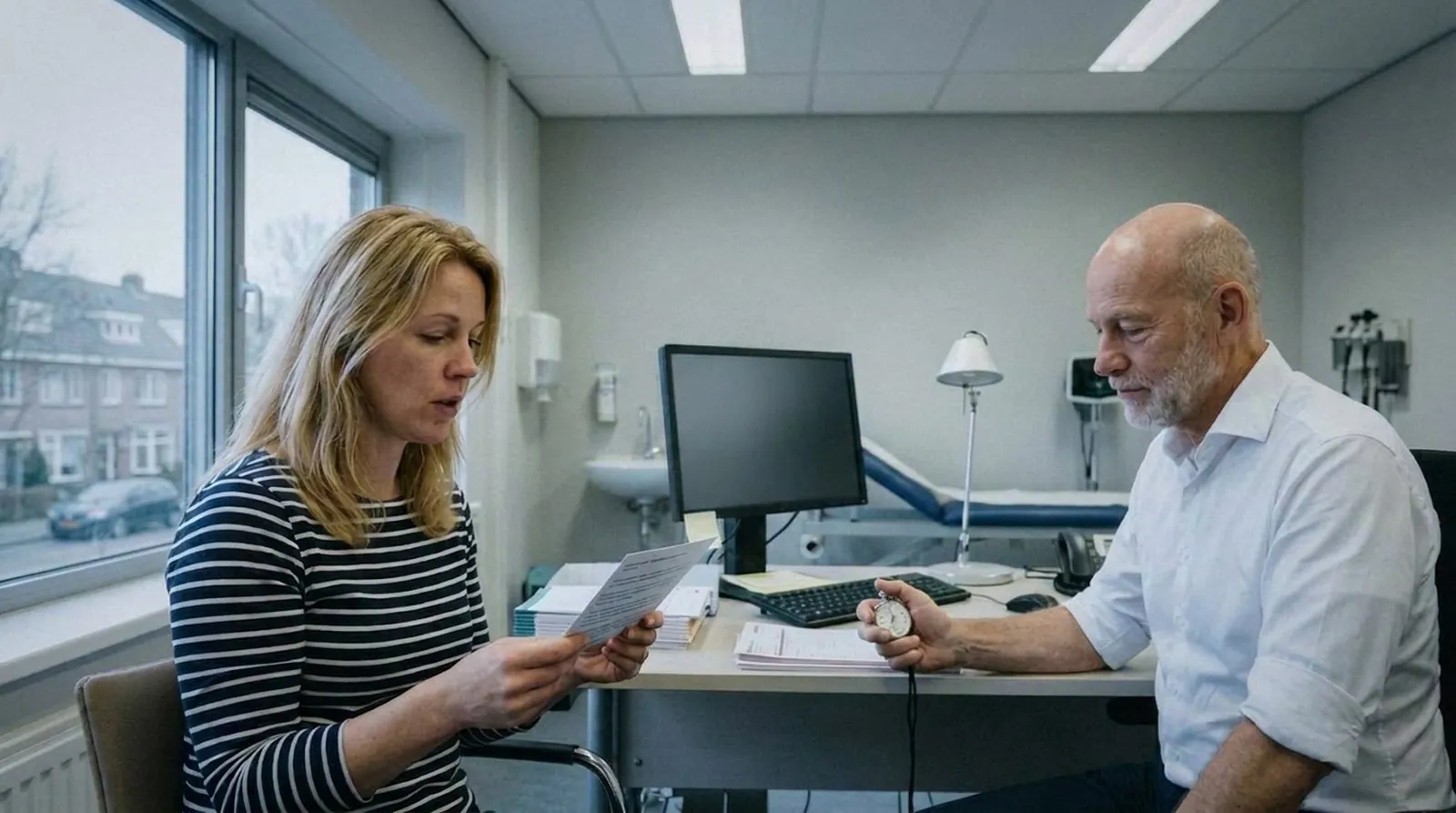
Re‑analysis of the Huntington’s trials you already ran
Your past Huntington’s trials hold audio never read for speech. You get Stroop Word Reading readings from it, where consent covers further analysis. No new collection, no site burden, a fixed fee.
On your scale
You get a reading per recording, joined to the visit score, calibrated on screening and baseline ratings and locked blind to arm before post‑baseline recordings are read, so no post‑baseline data shapes the model.
For your next trial
You get variance components and, from a completed trial, an effect‑size estimate your statistician computes on the locked readings, so your next trial is sized on your own data.
Rater checks included
Where rating visits were recorded, you get Trial QC flags per rater and visit, so you know which ratings to review.
Named features
You get the reading speed, articulation and timing features behind every reading, so your team sees what moved.
- You send
- Recordings or an authorization to their holder (we draft it), visit scores and the consent scope
- Readings
- Stroop Word Reading, per recording
- Planning
- Effect size and variance for the next trial
- Rater flags
- Per rater, where interviews are recorded
- New collection
- None
- Fee and timeline
- Fixed in writing before any data moves
Pre-screen on Stroop Word Reading before the screening visit
A short remote recording on the candidate’s own phone at home, read against a Stroop Word Reading range, where your entry criteria set one; the range is fixed in writing before the first candidate records.
Genetic, staging and functional checks stay with the site
They are confirmed at the screening visit, as the protocol sets.
Start your Huntington’s study
Start from audio you already hold, from site visits and home sessions, or beside your current speech vendor or your own models.
Site visits and home, between visits
You get readings between visits as well as at them, through your eCOA or app vendor or the participant’s own phone, with quality flags, so change can be seen between scheduled visits. Vendor qualification ›
Side by side with your current reading
You get a second reading from the same audio your vendor or in-house model reads, with named features and model versions by API, so you can compare and trace every reading. Your pipeline stays in place. Already using a vendor › Running your own models ›
Cephalgo in Huntington’s trials
What does Cephalgo read in Huntington’s disease trials?
Cephalgo reads Stroop Word Reading, a cUHDRS component, from speech, calibrated to your study’s screening and baseline counts, blind to arm, and evaluated on held‑out participants. Articulation and speech timing are reported alongside.
Which Huntington’s trials is Cephalgo built for?
Cephalgo is built for disease-modifying Huntington’s disease trials in HD‑ISS stages 0 to 2, including HTT-lowering therapies.
Do phone and software changes affect speech biomarker readings in Huntington’s trials?
Phone and software changes shift speech measures. Cephalgo readings stay stable across them, recalibrated from the audio, so a change in Stroop Word Reading comes from the participant. Device changes ›
Does Cephalgo replace the cUHDRS?
No. Cephalgo readings are joined to the Stroop Word Reading visit score; Symbol Digit Modalities Test, Total Motor Score and Total Functional Capacity stay with site raters.