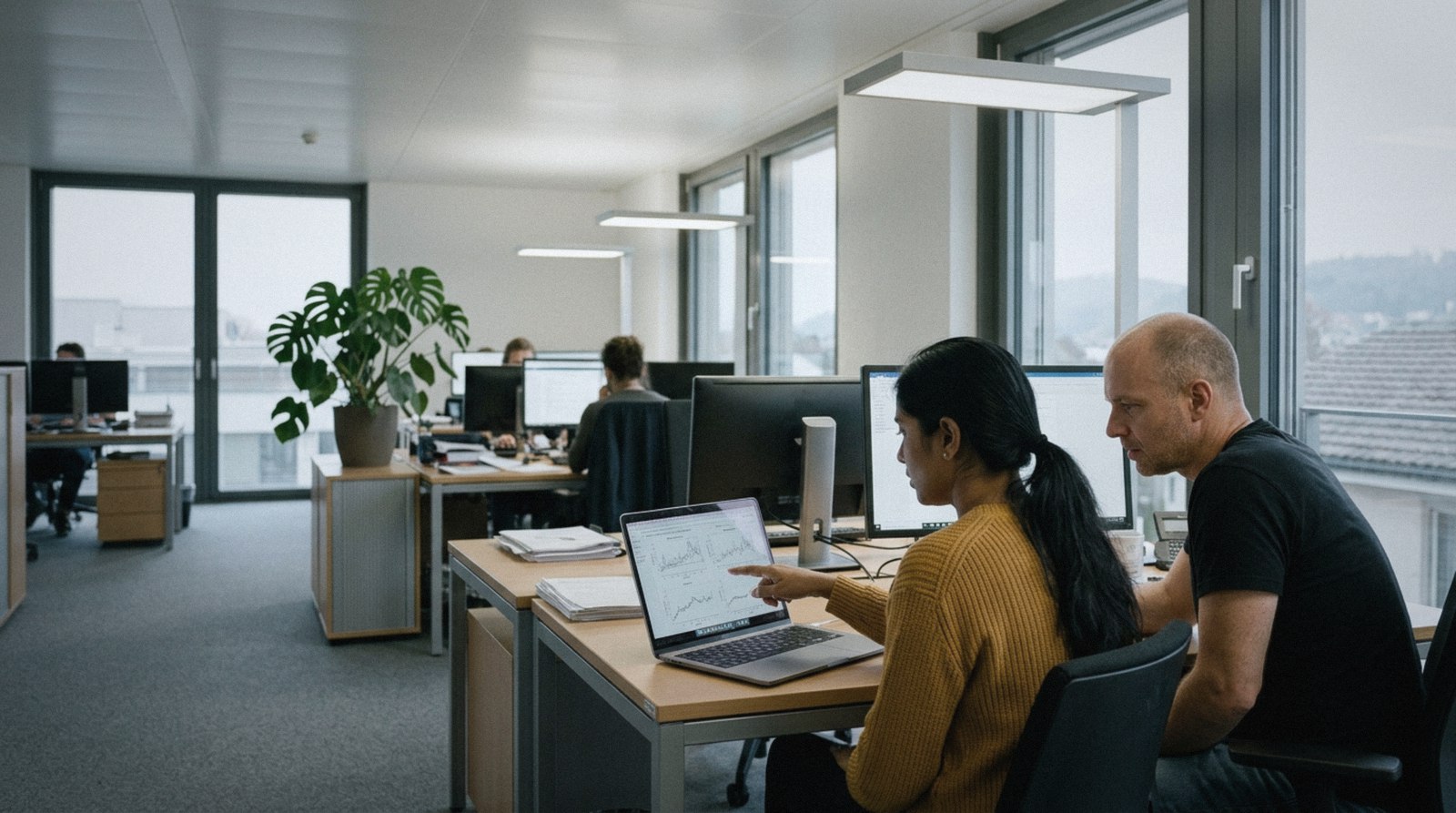
One phone model for every participant, one reading on your scale
When the protocol fixes the phone, we read every recording on your scale. The phones come from us, set up with our app, or from your eCOA vendor.
The same capture chain for every participant
A single phone model gives every recording the same microphone and the same recording mode, from screening to the last visit.
Same model, same recording mode
Every participant records through the same audio path, chosen from our reading of that phone’s firmware.
Simpler validation
One capture configuration to document for verification and the vendor qualification.
When the protocol requires it
For studies where sponsors, ethics committees or regulators ask for a provisioned device.
Study phones, set up and ready to record
Don’t worry about the phones: we take care of everything for you, from choosing the model to setting it up and replacing it.
Model chosen from the firmware
We select a model and chip variant whose capture chain we have read, and fix the recording mode the app uses.
Our app, set up for your study
Tasks, languages and visit schedule configured for the protocol, at the site or at home.
Logged from the first recording
Each phone, its software build and the app version travel with every recording.
Replacements traced
A replacement phone is logged with its build, and its recordings are read against the same reference.
Phones differ in what they do to speech, even in the same recording mode. Pick a phone to see each mode, and the one our app uses: unprocessed on Android where the phone declares it, otherwise voice recognition, and measurement mode on iOS.
Pick a phone
| Recording mode | Noise suppression | Gain control | Compressor or limiter |
|---|---|---|---|
| MeasurementOur app | Off | Off | Off |
| Ordinary recording | Off | On | On |
In measurement mode: a calibration filter, a 30 Hz high-pass and a fixed gain. iOS 18.3 rebuilt the microphone input stage without adding noise reduction or dynamics; readings are recalibrated across the update.
| Recording mode | Noise suppression | Gain control | Compressor or limiter |
|---|---|---|---|
| MeasurementOur app | Off | Off | Off |
| Ordinary recording | Off | On | On |
In measurement mode: a calibration filter, a 30 Hz high-pass and a fixed gain. An iOS 16 update gave each microphone its own filter without adding noise reduction or dynamics; readings are recalibrated across the update.
| Recording mode | Noise suppression | Gain control | Compressor or limiter |
|---|---|---|---|
| Unprocessed | Not declared by this phone, so our app uses voice recognition | ||
| Voice recognitionOur app | Off | Off | Off |
| Ordinary recording | Off | 0 dB range | On |
Voice recognition runs every processing block bypassed. Ordinary recording adds a multiband compressor.
| Recording mode | Noise suppression | Gain control | Compressor or limiter |
|---|---|---|---|
| Unprocessed | Not declared by this phone, so our app uses voice recognition | ||
| Voice recognitionOur app | Off | Off | Off |
| Ordinary recording | On | On | On |
Same software build as the Pixel 9, different processing on ordinary recording, so the model is logged with every recording.
| Recording mode | Noise suppression | Gain control | Compressor or limiter |
|---|---|---|---|
| Unprocessed | Not declared by this phone, so our app uses voice recognition | ||
| Voice recognitionOur app | Off | Off | On |
| Ordinary recording | Off | Off | Off |
Voice recognition runs a compressor on loud speech, an expander on quiet passages and a limiter. Recalibration covers it when participants bring this phone; as a study phone we would choose a model without them.
| Recording mode | Noise suppression | Gain control | Compressor or limiter |
|---|---|---|---|
| Unprocessed | Not declared by this phone, so our app uses voice recognition | ||
| Voice recognitionOur app | Off | Off | Off |
| Ordinary recording | Off | Off | Off |
Voice recognition runs no suppression, gain control or dynamics: a fixed high-pass, a fixed gain, channel selection and a short fade-in at stream start.
The recording modes
- Unprocessed
- Android’s optional raw mode: the platform rule allows a level multiplier only. Few phones declare it.
- Voice recognition
- Required on every Android phone, with noise reduction and gain control off by default; about half the phones we read still add a compressor or limiter.
- Measurement
- Apple’s mode for minimal system processing, on the primary microphone.
- Ordinary recording
- The phone maker’s default chain, often with compression or noise suppression.
Phones from your eCOA vendor, read the same way
If your eCOA or app vendor already provisions phones, we read the audio they record. No second device for participants.
Advice on the model
Before the phones are bought, we tell you what each candidate model does to speech, recording mode by recording mode.
The mode to request
We give your vendor the recording mode to request on each model; the reading comes from the audio, so their app stays in place.
Quality flags on every recording
Noise, clipping and speech duration read from each file, whichever app made it.
One reading across vendors
The same reading on your scale if a study moves from one vendor to another.
A fixed model still changes over a trial
Software updates and replacement phones change the processing, even on one model. Each reading is recalibrated from the audio, so it stays stable across conditions.
Software updates
A minor update can retune the recording path; each reading is recalibrated so it stays stable across conditions.
Replacement phones
The same model can arrive with a newer build or a different chip variant.
Your analysis, unchanged
Our model and the study’s measure definitions stay fixed; your longitudinal analysis runs as planned.
Audio untouched, blind to arm
Recalibration acts on the measures alone and runs blind to treatment arm.
Both work, and we support both
The choice depends on the protocol, the population and the sites. The tasks and the reading on your scale stay the same either way.
Study phones
Strengths
- One capture chain for every participant
- One configuration to document for verification
- Open to people without a suitable phone
- Meets protocols that require a provisioned device
Trade-offs
- Phones to buy, ship and replace
- A second device for participants to carry and charge
- Updates and replacements still change processing over a trial
Best when the protocol asks for a provisioned device, or many participants lack a suitable phone.
Own phones (BYOD)
Strengths
- No devices to buy, stock or ship
- Participants use the phone they already carry
- Scales across sites and countries without device logistics
Trade-offs
- Many models and recording modes to read
- Needs a compatible smartphone
- More models and builds to follow over a trial
Best when the trial spans many sites and countries, or follow-up is long.
We handle the phone logistics and the recalibration either way, and mixed designs work too: study phones where needed, own phones elsewhere, site recordings and audio you already hold, all read the same way.
Bring your own device